OPINION | Venice Biennale | 1 March 2025
On February 7, Khaled Sabsabi was Australia’s choice for the Venice Biennale. Six days later, he was a liability.

THE SELECTION
A Choice and Its Context
On February 7, 2025, Creative Australia announces Khaled Sabsabi as Australia’s representative for the prestigious 2026 Venice Biennale, with a $100,000 commission for new work. A Lebanese-Australian artist with a 20-year career, Sabsabi carries a reputation for provocative pieces—his 2006 video reflecting on 9/11’s aftermath, created as a Master’s student and his 2007 work featuring Hezbollah leader Hassan Nasrallah, which have been exhibited widely. Creative Australia, the government-funded arts body, knows this history. Their choice is deliberate: an artist whose work grapples with identity and conflict takes Australia’s story to a global stage.
The decision rests on a principle enshrined in the Australia Council Act 2013, which mandates Creative Australia to “support freedom of expression in the arts.” In a nation of 26 million—where one in four are born overseas, where Muslim and Arab communities form a vibrant thread—this is more than aesthetics. Sabsabi’s selection, paired with curator Michael Dagostino, signals an intent to showcase a multicultural perspective, a voice from the diaspora that can resonate in a world wrestling with division. The arts community welcomes it; beyond their circles, it barely registers.
Yet the choice carries weight beyond the arts community. Australia in 2025 is a country on edge—migration debates simmer, antisemitism rows flare over Gaza rhetoric, and a federal election looms by May 17. Creative Australia’s mandate promises independence, a buffer between art and politics. Selecting Sabsabi tests that promise. His work, tied to Middle Eastern fault lines, isn’t just art—it is a philosophical gamble: can a pluralistic society embrace an artist whose lens might unsettle as much as it reveals? The ethical question hangs implicit: who decides Australia’s identity, and at what cost?

THE TRIGGER
A Newspaper's Frame
Four days later, on February 11, The Australian publishes a piece titled “Arts council takes creative approach to racism.” Written by Yoni Bashan and Nick Evans, it sidesteps Sabsabi’s new commission, focusing instead on his past—9/11 imagery, Nasrallah’s face—cast as “controversial” and “terrorism-adjacent.” The article frames a question: Should this represent Australia? It isn’t a review of his skill or intent; it is a challenge to his legitimacy, a spark in a tinderbox.
The context matters. The Australian, a Murdoch title, often leans into cultural wedges, especially under a Labor government battered by security critiques. In 2025, the Albanese administration faces pressure—antisemitism claims dog them, and the opposition Liberals are poised to exploit any misstep. Bashan and Evans’ piece isn’t news in the sense of revelation—Sabsabi’s works are public, known themes of his creative work.
It is a reactivation, a narrative nudge that lands amid right-wing X chatter and media pickup by day’s end. The article alone does not cancel Sabsabi; it merely builds the architecture for others to do so. The ethical dilemma sharpens here. Creative Australia’s silence—no defence, no clarification—leaves the article’s frame unchallenged. Their legal duty is to protect artistic freedom, not bend to public mood. Yet the piece raises a philosophical tension: in a multi-faith nation, where national security narratives carry weight, how far can art push before it’s deemed a liability? The ramification isn’t just Sabsabi’s fate—it is the precedent. If a newspaper can reframe an artist’s career and an arts body lets it stand, the boundary between culture and politics blurs. Who controls the story now?

THE ESCALATION
Politics Takes Hold
On February 13, the Senate becomes the pivot. During Question Time, Liberal Senator Claire Chandler asks Foreign Minister Penny Wong: “With such appalling antisemitism in our country, why is the Albanese government allowing a person who highlights a terrorist leader in his artwork to represent Australia on the international stage at the Venice Biennale?” The phrasing is surgical—Nasrallah, a listed terrorist, fuels a security fear loaded with cultural conflict. It isn’t about Sabsabi’s art as expression; it is a political lever, soon sharpened by charges of 9/11 imagery in her follow-up question.
Chandler’s question is strategic. It is not designed to seek an answer—it is designed to plant an association. The Liberals, exploiting recent polling success, see an election-year opening. With a deadline of May 17, 2025, and cultural identity a live issue, they can paint Labor as reckless, indifferent to a diverse nation’s fears.
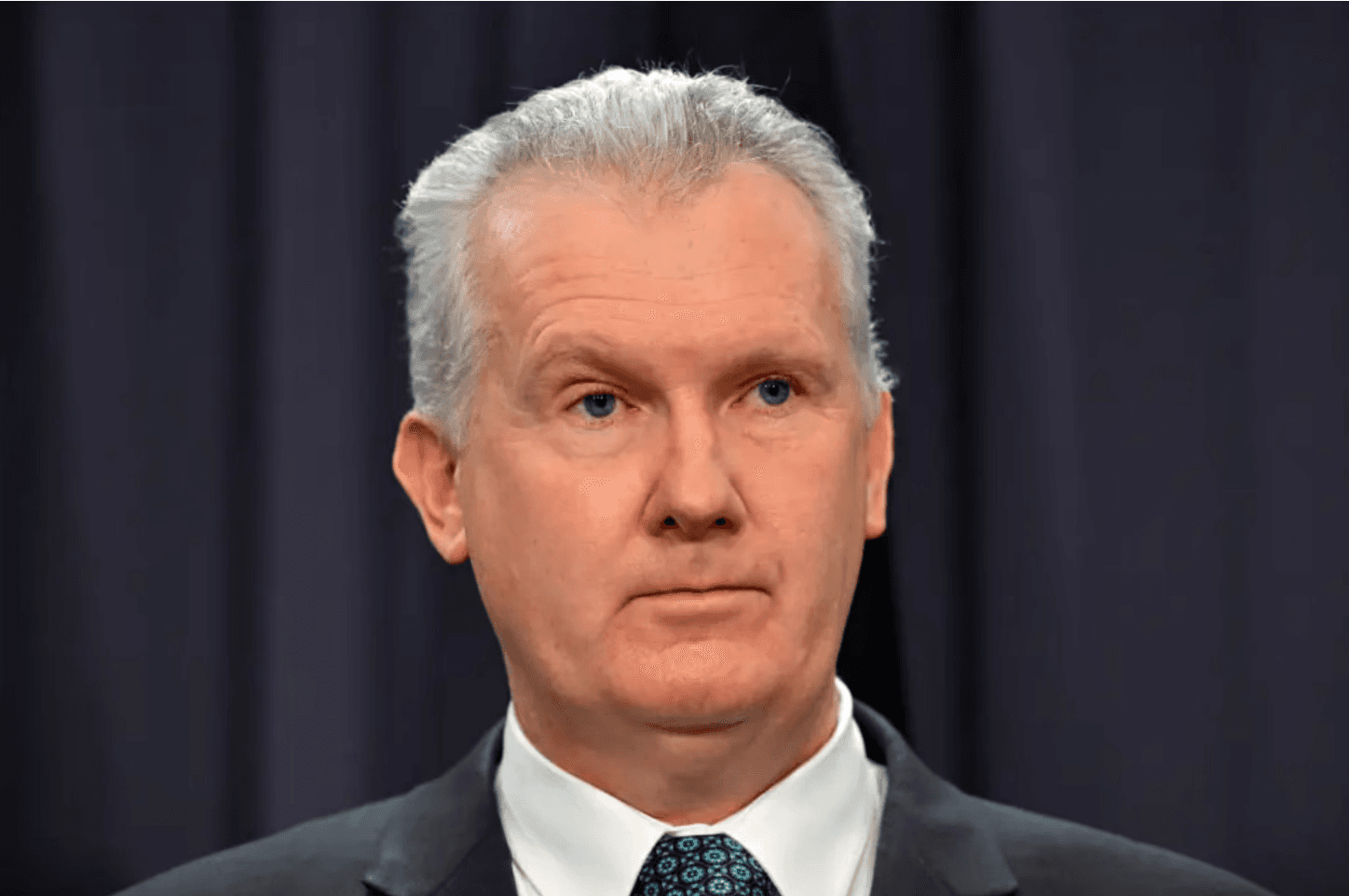
Parliamentary privilege under the 1987 Act shields Senator Chandler—no defamation risk, just impact. Media amplifies it: Sky News runs the clip, X debates flare. That same day, Arts Minister Tony Burke calls Creative Australia CEO Adrian Collette. Burke later describes it as “a discussion, not a directive.” Hours later, the board meets and votes unanimously to cancel Sabsabi, citing a need to avoid a “prolonged and divisive debate.”
The timeline—article, Senate question, ministerial call, board decision—speaks volumes. Six days earlier, Sabsabi was Australia’s choice, his past a known quantity. Now, he is gone, not for new facts but for political noise. The legal implications are stark: Creative Australia’s independence, a statutory pillar, looks compromised. Burke’s call, however framed, and Chandler’s strike suggest influence; the board’s haste seals it. Philosophically, this is a fracture: an arts body meant to defend expression prioritises optics over duty. In a multicultural Australia, where power over security narratives shapes belonging, the political angle dominates—Sabsabi becomes a pawn, not an artist.
THE AFTERMATH
A Reputation Unravels
From February 14 to 26, the fallout settles in layers. Creative Australia confirms Sabsabi’s exit on February 14, announcing a process review to “reflect on decision-making.” Sabsabi stays silent until February 26, when he tells The Guardian he’ll show his work “no matter what.” By then, public perception shifts—on-line, he is “the Hezbollah artist”; on radio, a “risk.” His 20-year career—complex, acclaimed—contracts to a single, damning label.
The arts community reacts. By February 16, a petition with 3,000 signatures, including Venice Golden Lion winner Archie Moore, demands his reinstatement, calling it “a betrayal.” Two advisors quit Creative Australia, one citing “cowardice.” The response isn’t just solidarity—it is a recognition of stakes. Sabsabi’s undoing isn’t personal; it is systemic, a test of who gets to speak for Australia.
Ethically, this is a rupture. Creative Australia offers no hearing, no defence—just a cut. In a nation where Muslim and Arab voices navigate scrutiny, this reinforces a hierarchy: some perspectives are too fraught, too easily weaponised. The philosophical cost is steep: art reflecting a multi-faith reality can be silenced if politics deems it inconvenient.
Politically, the Liberals win the narrative—Labor’s retreat lets the security frame stick, unchallenged by a body meant to resist.

THE LEGAL RECOURSE
A Path Forward?
Can Sabsabi reclaim ground? The law offers avenues, each challenging. Creative Australia’s duty under the 2013 Act is clear: support artistic freedom, resist political sway. The sequence—The Australian’s piece, Chandler’s question, Burke’s call, the board’s vote—hints at interference. Judicial review could deem the decision “unreasonable” or “improperly influenced,” resting on timing, not guesswork. A contract breach looms: Sabsabi’s $100,000 commission is for new work, not a referendum on old pieces.
Cancelling it under pressure might not stand. Defamation stings deeper. Dropping him implies he’s unfit—a terrorist sympathiser, a liability—without proof or rebuttal. Under the Defamation Act 2005, that’s actionable if false and harmful; Sabsabi’s damaged reputation—professional, global—is proof. The arts community’s outrage—petitions, resignations—bolsters this: not a fair call, but a smear. Yet the fight’s daunting—government resources dwarf his, and courts often favour agency discretion unless breaches are blatant.
The stakes exceed one artist. A win could force Creative Australia to uphold its mandate, set a precedent for arts autonomy. A loss might cement cultural bodies as political pawns. For a diverse nation, where art shapes identity, this isn’t abstract—this matters deeply.
THE POLITICAL STAKES
Who Wins the Narrative?
This is a battle for control. The Liberals, with Chandler’s question, turned Sabsabi into a symbol—security threat, cultural misstep—for electoral gain. Privilege protects them; the election clock fuels them. Labor, via Burke’s call and Creative Australia’s fold, has faltered—unable to defend a multicultural vision, they let the opposition’s frame dominate. Creative Australia, meant to stand apart, aligned with power, not principle.
In a pluralistic Australia, this matters. National security narratives—post-9/11, post-ISIS—often target Muslim and Arab communities, shaping who’s “safe” to hear. Sabsabi’s cancellation reinforces that: some voices are riskier, some stories expendable. The political victory tilts to the Liberals—they dictate the terms, while the oft-maligned arts and Muslim voices fight a solitary defence.
THE PERSONAL TOLL
An Artist Silenced
Sabsabi remains the centre. His name now carries a stain—terrorist sympathiser at best, jihadist at worst—imposed without a voice. Creative Australia gives him no hearing; the public gets no rebuttal. His February 26 pledge to persist hints at resolve, but the damage is real: a career re-framed, his belonging questioned. Ethically, this is indefensible—he is judged and discarded by others’ rules. Artistically, it’s a loss: an artist reflecting a multi-faith nation is muted. Legally, he can fight—contract, defamation, review—but the odds favour power. Artistically, will his reputation outlast the smear?
THE PRESENT
A Question Unanswered
As of February 27, 2025, Creative Australia’s review remains a distant procedural echo. The Liberals continue to press their weak-on-security-and-antisemitism line; with Peter Dutton at the helm, his unapologetic 2016 claim that Lebanese-Muslim migration was a “mistake”—mirrored in his Palestinian doubts—likely influences Liberal sentiment and strategy, and haunts a nation desperate for cohesion. Labor scrambles to regroup. Sabsabi faces a choice—court, an unauthorised showing at Venice, or both. This isn’t just his story—it’s Australia’s: who owns its culture, and what happens when politics trumps art? The facts stand; the dilemma lingers. Australia decides.
In the end, it wasn’t Sabsabi’s art that spoke the loudest. It was the silence imposed upon him.
♦